Tuesday, 31 August 2021

Mapping tribal owners to benefit Bina landowners and cannery

27 August 2020 | 


Honiara, Solomon Islands - Verification has begun of the people who have claimed tribal ownership of the land where the Bina Harbour tuna cannery will be built, and nominations for positions as tribal trustees opened on Monday, 24 August.

Elections for trustees will be held in the next two weeks.

These are important steps in ensuring the building of the Bina Harbour tuna cannery is not disrupted by landowning disputes, which have halted other projects in Solomon Islands.

Verification is part of the process of formally mapping the tribal owners of the land. Its importance has been underlined by the estimated cost of the project and the level of private investment in it.

The project is likely to cost at a little over SB$2 billion dollars, with an external investor to contribute about 40%. 

Celsus Irokwato Talifilu, a local adviser to the Malaita Province Premier, said the cost of the project meant the government of Solomon Islands needed to be “very careful” to build the right foundations for success — and that meant mapping the tribal beneficiaries before the project started. Mapping entails identifying and registering people from the tribes acknowledged as tribal owners by the Solomon Islands High Court.

Mr Talifilu heads the Premier’s Advisory Research Unit (PARU) for the Malaita Provincial Government (MPG). He said it was important to establish who the resource owners were before site preparation and building began.

“These exercises are pillars for a sustainable project,” Mr Talifilu said.

He said those who intended to invest their hard-earned cash in the project would not do so if they believed the land-settlement process was inadequate. 

A dispute over land was settled in 2016–2017. In July, a memorandum of understanding (MOU) to commence work on the Bina Harbour project was signed. It included agreement to map tribal landowners as beneficiaries of the project. Mapping was conducted over eight days in July.
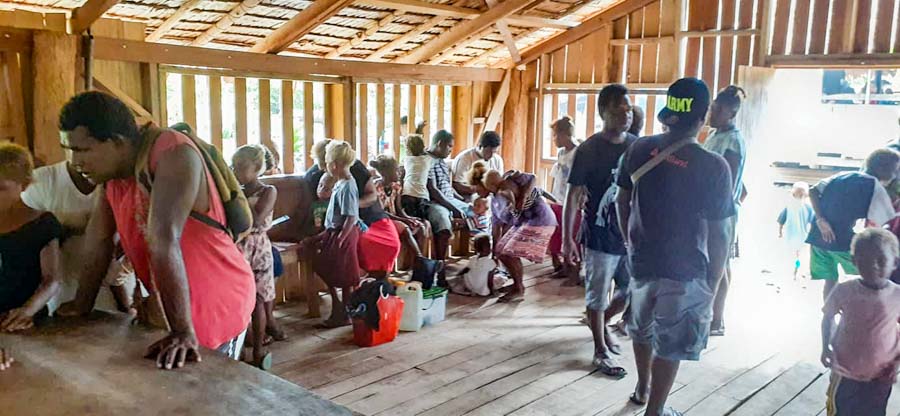
Bina Harbour women, men and children wait inside open-walled room to have names recorded as beneficiaries, Solomon Islands
Tribal landowners waiting their turn to have their names recorded as part of beneficiary mapping at Bina Harbour

In a statement, PARU said: “The beneficiary mapping exercise is a critical part of the land-settlement process for the Bina Harbour tuna processing plant project. This exercise ensures the resource owners are rightly identified and recorded. It is also the basis for a clear beneficiary scheme for the landowning groups.

“The MPG participation is crucial as a partner in the development of the project under the newly signed MOU. It is also a good exercise for the province so that the province can help with messaging of the new scheme that is more such sustainable.” 
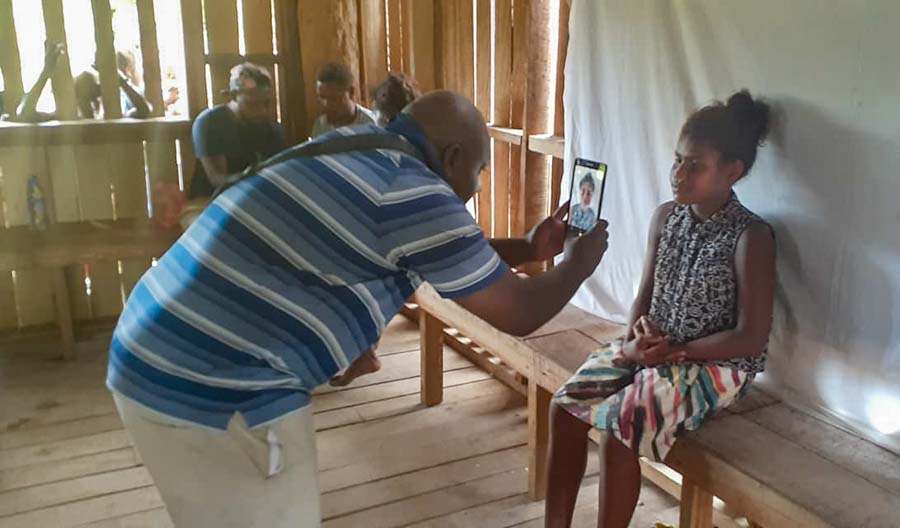
Man uses a tablet to take a photo of a young woman who is a tribal landowner at Bina Harbour, Malaita, Solomon Islands
Albert Benisi of Pacific Horizons goes through the formal process of identifying and registering a tribal landowner as part of the Bina Harbour beneficiary mapping

Mapping means formally agreeing who the landowners are

The mapping exercise involves formally registering all living people among the landowning tribes. The record of each person includes a photo of them, and the names of their parents and grandparents. The list of names is then verified by the group elders. After verification, the list is given back to the group for final checking. The checking might take two weeks. 

After the final list has been approved, the groups seek nominations for the election of their trustees.

Pacific Horizons Consultancy Group is mapping the beneficiaries. It conducted the same exercise for the Tina hydro project. 

New approach means representation should be fair

Albert Benisi of Pacific Horizons said the consultancy used a new approach to mapping the benefits for landowning groups. In the past, disputes over land ownership had brought projects to a halt. 

Mr Benisi said the approach taken at Bina Harbour would benefit all landowning groups. 

“The approach taken now is different from logging, which normally leads to unfair distributions of benefits to landowners,” Mr Benisi said.

“For this approach, there will still be trustees overseeing the tribal group who are parties to the development, just as with current logging and mining operations in the country. 

“But the trustees will be working for tribes as representatives only, and not deal with benefits and such.” 
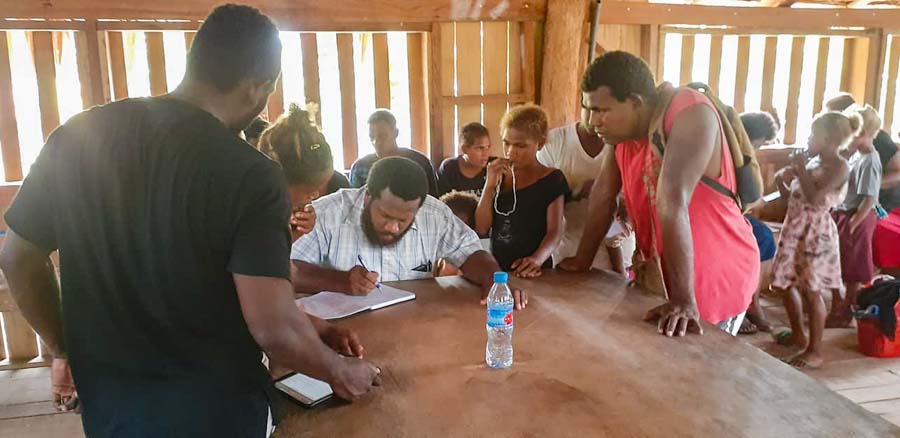
Man sits at table writing in book while other tribal landowner applicants look on, Bina Harbour beneficiary mapping, Solomon Islands
Another step taken in recording the details of tribal landholders during the Bina Harbour beneficiary mapping

Because trustees would be elected, they stood as the choice of the tribes. Representation would be fair. In the past, those who were close associates of the land would be automatically qualified to be a trustee.

“One of the good things about this approach is every single member of the tribal landowning groups, from infants to elderly individuals, will be the beneficiary of the Bina Harbour cannery project,” Mr Benisi said.

He said that mapping would be completed for both primary and secondary rights holders of Bina land, and that everybody would have the same benefits from the cannery once it was fully operational.

Any company that runs the cannery will need to buy shares directly through the bank accounts of the individuals registered under the tribes. Young people would be eligible to receive their shares when they turned 18.

The cannery is due to start operating in 2023, and process about 27,000 metric tons of fish a year.

In Solomons, some fisheries sectors thrive while others struggle under pandemic rules

3 August 2020 |  


HONIARA, Solomon Islands – In the provinces of Solomon Islands, a rising interest in fishing by people in coastal communities is helping keep the country’s fishing industry active amid the COVID-19 pandemic.

The Permanent Secretary of the Ministry of Finance and Treasury, Makini Dentana, has confirmed that the fisheries sector is the only industry currently generating revenue in the Solomons.

“The good news is that, despite the COVID-19 pandemic crises globally, our fisheries industry, especially Soltuna, is still generating revenue to the country,” Mr Dentana said.

Records from the Ministry of Fisheries and Marine Resources (MFMR) show a steady increase of revenue collected from fisheries exports and licence fees by both inshore and offshore fisheries activities in recent years.

But with the current closure of the Solomon Islands border and other pandemic restrictions, there has been an increase in fishing, as most working-class people have been laid off or made redundant due to COVID-19.

And despite the restrictions and the introduction of the State of Public Emergency (SOPE) by the government in April, purse-seine vessels that continue to fish in the Solomon Islands exclusive economic zone (EEZ) are still transhipping at the Honiara port.

The main fish market in Honiara remains open, and continues to benefit from the tuna industry, just as it did before the arise of the coronavirus SARS-CoV-2. This market is also where most of the fish stocks from the provinces end up.

The country needs the fisheries: according to the Central Bank of Solomon Islands, the local economy is projected to shrink by 4.99% by the fourth quarter of this year.

Fisheries one of four sectors that hold up the economy

In July, former Prime Minister Gordon Darcy Lilo, an economics expert, said the fisheries sector should be prioritised to sustain the country’s shrinking economy.

In an interview with the Solomon Islands Broadcasting Corporation, Mr Lilo said that, while COVID-19 continued to ravage the global economy, small economies like that of Solomon Islands would be hit especially hard. The country needed to set its priorities to make the most of gains.

“The fisheries sector will put our economy back on track. The most immediate one that comes to mind is the processing fisheries sector. I want us to put more focus on the fisheries sector,” Mr Lilo said. 

“A good part of our territorial boundary is made up of waters where we can fish, and we need to focus on both offshore and inshore fisheries. That will put our economy back on track.”

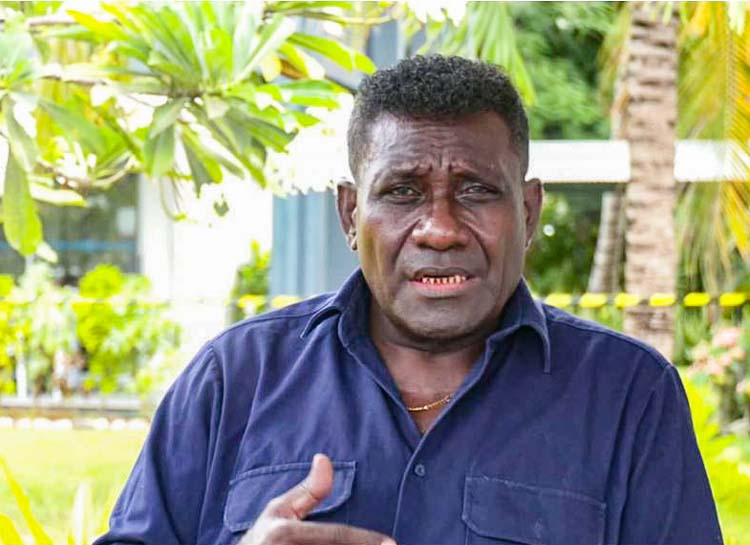
Head and shoulders photo of Gordon Darcy Lilo, former Solomon Islands Prime Minister. Photo: Charles Piringi/SIBC.
Former Solomon Islands Prime Minister and economics expert, Gordon Darcy Lilo. Photo: Charles Piringi/SIBC.

He said the fisheries industry was different to other important industries such as tourism, which involved complicated processes in order to operate. The fisheries industry could operate more freely, but needed continued commitment from the national and provincial governments.

“With fisheries, the resources belong to the state, it only requires both the national and provincial government to attract the right investors to establish processing facilities here, say in all provinces,” Mr Lilo said.

In recent times, the national government has identified fisheries as one of the four sectors with agriculture, mining, and tourism that stimulate most growth in the Solomon Islands economy.

The government hopes the four sectors will earn adequate incomes for the national purse to replace income earned from exporting round logs to China, as economic planners envisage all harvestable forests will have been logged in three or four years.

The logging industry currently provides about 50% of the government’s annual income.

With the inception of focus on the four sectors, the government aims to set up 50 fisheries centres and 50 economic zones in the 50 constituencies countrywide. 

For the fisheries and tourism sectors, contacts have been established between ministries and foreign investors, mostly in Asia.

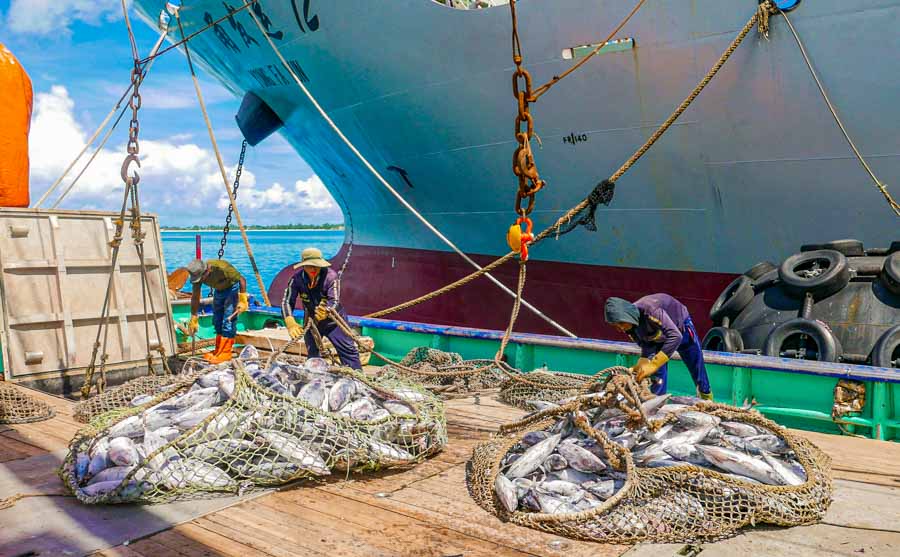
Tuna in nets being transhipped from purse-seine vessel at Honiara port. Photo Francisco Blaha.
When tuna is transhipped at the Honiara port, fish that are discarded from the purse-seine vessels normally end up at the fish markets in Honiara. Photo: Francisco Blaha.

Fish vendors in Honiara struggle as sales fall

When the first SOPE was declared, Fishing Village market in east Honiara and White River market west of Honiara city were forced to close down. 

Only the Honiara Central Market has been allowed to continue operating, but under strict rules. This has allowed fish vendors to continue to work. But nearly all fish vendors have left Honiara for their home provinces, as part of a repatriation exercise by the national government conducted when the lockdown began. 

Local vendors have continued to work, and now, three months on, those from other areas are slowly returning. However, the Sunday Isles newspaper recently reported that a cash-flow problem was hitting the vendors hard, as the number of customers was well below the usual and was affecting daily earnings.

“Local vendors at the Honiara Central Market are attracted to this occupation because of the possibility of earning relatively medium to high incomes,” the paper wrote. 

“The impact of the state of public emergency on Honiara’s formal sector, which includes many fish-market vendors, will be huge.”

It said that vendors’ economic survival was threatened. They had already had “months and weeks with less cash flow as their customers spend less on their fresh fish” and would have to go through more if the SOPE was extended. 

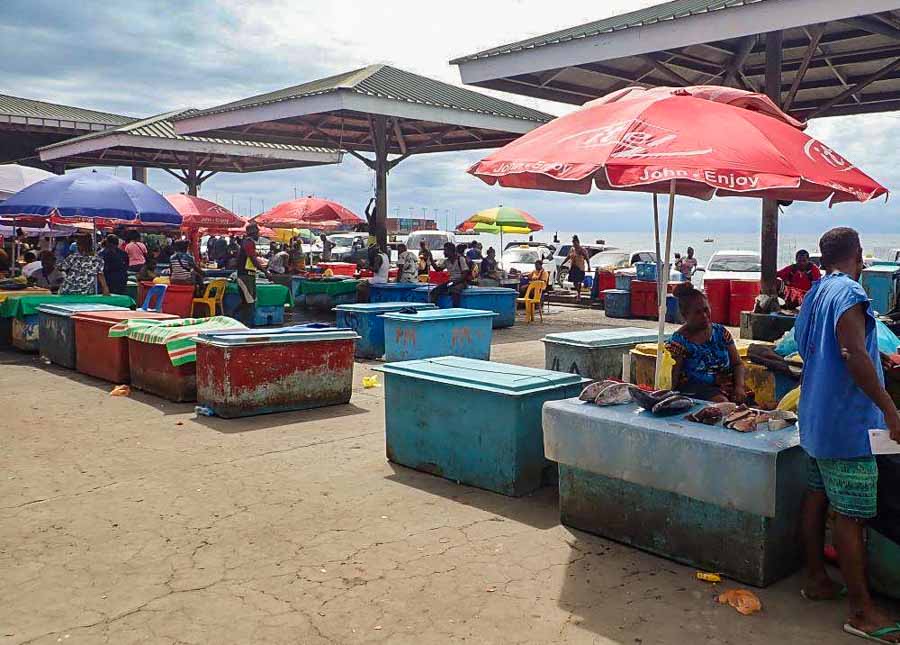
Fish vendors at Honiara. People work among ice-chests under the shade of shelters or umbrellas. Photo Sunday Isles.
Almost all fish vendors have left Honiara for their home provinces, as part of a repatriation exercise by the national government to minimise the spread of COVID-19. Photo: Sunday Isles.

Sunday Isles reported fish vendor Henry Fafaluta as saying, “I find it very challenging during these past months by trying to earn the amount to cover the expenses I spent daily for fuel.”

He explained that normally his earnings depended entirely on his catch.

“If the catch is good then, I will surely earn good money that day, but compared to now, even if my catch is good, my earnings will still be low, due to the cash flow problem we experienced now.”

The person in charge of the fish section at the Honiara Central Market, Betty Fraser, said that she had seen vendors struggling in the current situation. 

“Vendors struggle every day to get the amount of profit to cover their expenses, some for their catch, and others for purchasing from the fishing vessels. With that they also try their best to at least earn a little extra to take back home to their families at the end of the day,” Ms Fraser said in the Sunday Isles.

Ambrose Sade normally gets fish discarded during transhipment in Honiara and sells it at the Honiara Central Market. He has observed changes in the way customers have bought fish in recent months.

“During the SOPE active period, I was fully engaged in fish sales here at the market. Everything is normal, except that the number of customers coming to buy fish at the market is a little below my normal take,” Mr Sade said.

“Cash flow is definitely an issue for me and the other fish vendors. Otherwise, everything is just normal here, as we are still keeping the fish-vending activities going.”

Vendors hope that an economic stimulus package proposed by the national government will be implemented soon and help to keep them going until sales pick up again.