2 February 2021 | TUNA PACIFIC

HONIARA, Solomon Islands – While national and regional observer vessel placements remain suspended until at least 15 February, Pacific fisheries organisations are focused on ensuring that working conditions on fishing vessels are made safer for both observers and crew before the observer program resumes.
The Pacific Island Forum Fisheries Agency (FFA) continues to progress suspension of the observer program, as a priority of the Forum Fisheries Committee (FFC).
The Western and Central Pacific Fisheries Commission (WCPFC) initially suspended the observer program on 8 April 2020, to protect the health of observers working on purse-seine vessels as COVID-19 spread rapidly worldwide. The suspension has been extended several times.
Heading into the recent 17th WCPFC meeting, which was held by web link, one of the key priorities of FFA and its members was improving the safety of crew and observers.
The FFA members noted that it was simply unacceptable that observers potentially continued to face risks at sea and to suffer persecution, serious injuries and even death in the course of their work, and that human rights abuses were suffered by crew working on fishing vessels operating in the Pacific region.
In a submission to the WCPFC before the Tuna Commission meeting, FFC Chair Mr Eugene Pangelinan said the members of the FFA were “committed to addressing these issues and are taking measures to improve standards in relation to fishing within our waters, and to create a ‘safety culture’ around the role of observers.
“It is imperative that the commission collectively commits to implement such standards on the high seas. We look forward to working with CCMs and with committed partner organisations to advance this work in the commission as a matter of priority over the coming year,” Mr Pangelinan said. (CCMs are the members, cooperating non-members and participating territories that make up the governing body of the WCPFC.)
Disappointing decision on crew and observers at WCPFC
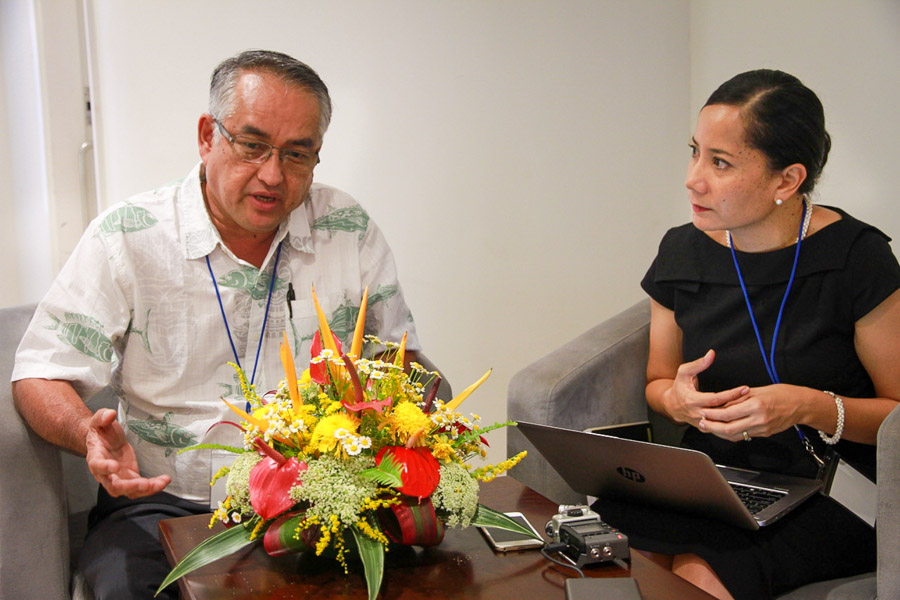
However, speaking to Pacific journalists at the end of the 17th Tuna Commission meeting, Mr Pangelinan said the FFA members had walked away with mixed feelings about the WCPFC decision on the safety of crew and observers.
This is due to the fact that before the commission meeting, members had hoped that all CCMs would share FFA members’ belief in the level of importance of observer safety and labour standards of crew and fishing vessels operating in the WCPFC convention area.
“Regrettably, one CCM [China] had legal as well as procedural issues about this kind of a measure being put forward by Indonesia,” Mr Pangelinan said.
At the Tuna Commission meeting, Indonesia submitted a proposal regarding the adoption of a conservation and management measure (CMM) on labour standards for crew of fishing vessels. (A resolution on labour standards exists, but resolutions are not binding and so not enforceable. It is mandatory to follow the provisions of CMMs.)
In its submission, Indonesia acknowledged that fishing crews were at risk of forced work, low or no pay, and human trafficking because of communication challenges, and the absence of proper training and of authorisation of wellbeing and work benchmarks.
In submitting the proposal to the Tuna Commission, Indonesia’s Director of Fish Resources Management, Mr Trian Yunanda, wrote: “Forced work and human dealing in fisheries segments are much of the time connected to different types of wrongdoing, for example, transnational sorted out fisheries wrongdoing and corruption.
“Another labour abuse factor is the expanding worldwide interest for fish and the quick development of modern fishing fleets alongside overexploitation. Fishing operators can have a competitive benefit by crewing their vessel with under-qualified and cheap members.”
“In the spirit of responsible fisheries management, an issue of labour abuse needs to be addressed properly and regulated accordingly, including within the convention area of WCPFC, through the implementation of conservation and management measures for labour rights.”
Mr Pangelinan told the Pacific journalists that, although the proposal did not become a CMM, with FFA members’ guidance and because CCMs were so vocal about the issue in the Tuna Commission meeting, they were able to carve out a hybrid intersessional working group (IWG) that would advance the work that Indonesia is doing.
“New Zealand will be co-chairing that process of working to address the concerns of that one CCM, in relation to whether the commission has a mandate to also address issues of labour and crewing standards and observer safety and so forth,” Mr Pangelinan said.
He also confirmed that the FFC was convinced that it did have that mandate.
“There are many legal instruments or legal provisions of the convention that lead us to believe that that is the case. And we will continue to work with other CCMs to make sure that, in 2021, the IWG does manage to or at least continues to work on even an independent study that specifically focused on this particular issue in the WCPFC area,” he said.
The FFA Director-General, Dr Manumatavai Tupou-Roosen, said the intersessional process “is an important outcome for this commission, given the different views among CCMs on the mandate of the commission to deal with this subject matter.
“As the chair and our members have said in strong support for Indonesia’s draft crewing CMM in the past, in the lead-up to adoption of the Korean resolution, this is a top priority for our membership. And – we’ve said this before – it’s the right thing to do: it is the human side to our work and cannot be ignored. Work must progress on this, not just within our waters but also, importantly, within this commission on the high seas,” said Dr Tupou-Roosen.
Top priority to get observers back on fishing vessels
Despite the mixed reactions by members on discussion on the safety of crew and observers at the Tuna Commission meeting, getting observers back onto ships is still a top priority for the FFA and the FFC.
Mr Pangelinan told journalists: “Obviously, with over 800 observers in the Pacific, it is important that we try to put them back to work and provide for their families, and being also the eyes out on the water.”
But while COVID-19 continued to prevail in the region, “the safety of observers is of paramount importance”.
“All these additional COVID responses that we’ve had have added additional burden on the secretariat and the members in terms of compliance and reporting. And so the bit of normalcy would be something that everybody would welcome.
“Unfortunately, that’s not the case [at the moment]. And I think that, notwithstanding COVID-19 still happening throughout the region, some members were of the view that they wanted to still start the deployment, and get people back on the vessels,” Mr Pangelinan said.
“But we’re not confident yet that the commission has a robust guideline and protocol that all members must adhere to, to ensure the safety of observers as we slowly recommenced the deployment. And that’s why we called upon even other systems who have non-FFA members to show us what have they put in place that will provide us the assurances that observers will be cared for, taken care of and protected against potential contracting of the COVID-19.”
Dr Tupou-Roosen said that, in the meantime, a draft intersessional decision worked be worked on by the commission chair to be circulated by end of January or early February.
“The commission chair will work on some language that will be circulated before then to sit to determine what can be done before it [the current suspension] expires. This is something that our membership will continue to look at,” she said.
Members call for COVID-19 protocols for observers
The FFC had already established protocols and guidelines that it called best practice, ready for the day when the suspension was lifted. Most members had said that returning observers to vessels was a necessity for their vessels to continue to operate.
“But, obviously we’re just going to have to sit back and wait and see what happens,” Mr Pangelinan said.
“The commission is already starting to think ahead about how we’re going to actually do that.
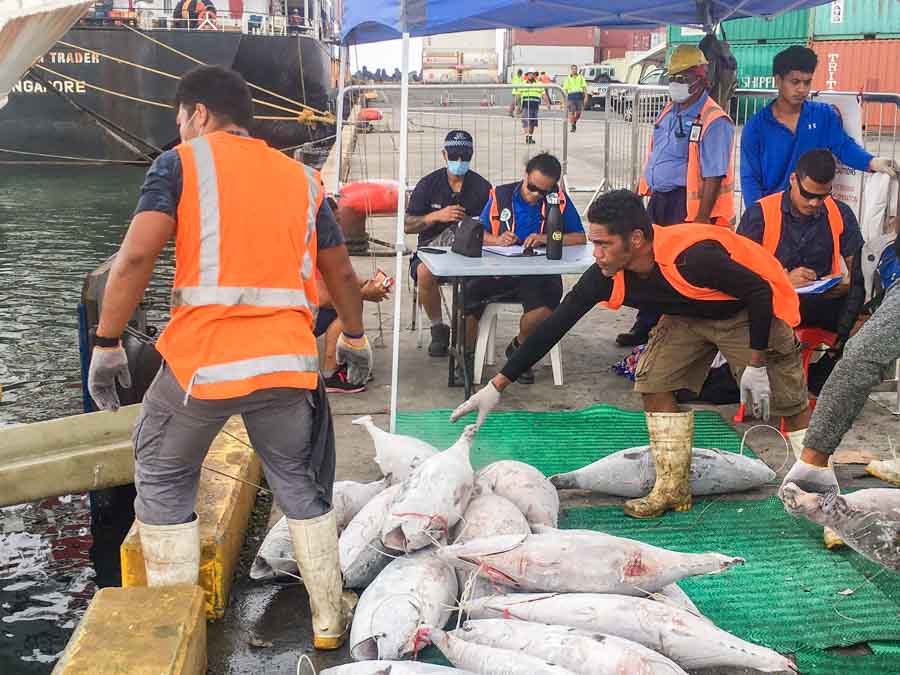
FFC had called on members to share their national protocols “to see whether those match up with the kind of assurances we want for our observers – when they’re redeployed, whether they’re coming through their own ports or through some other ports – that they’re not a lower standard than what the FFA members have put together.
“We have to keep bearing their safety in mind and the safety of the populations of the countries that they’re also going through,” Mr Pangelinan said.
“The FFA is the only one that has put forward a credible COVID-19 response protocol and guideline that we would put our name on, that is probably the best practice. But we’re happy to continue to work with other members.”
He said that vessel owners and vessels wanted to see progress on preparations for the resumption of onboard observer work.
In support of the need to have all national COVID-19 protocols in hand, the FFA had asked other CCMs to share their protocols, so it could assess their standard .
“The goal is always to give our national observer programs the confidence that they can safely return their observers to vessels,” Dr Tupou-Roosen said.