Tuesday, 31 August 2021

New cannery key to development on Malaita

 17 July 2020 | 


HONIARA – The proposed Bina Harbour processing plant in Malaita province, Solomon Islands will be a key economic pull factor that will drive other developments for the province, says the Minister for Fisheries and Marine Resources (MFMR), Nestor Giro.

Minister Giro made the assurance when the Malaita Provincial Government (MPG) and his Ministry signed a historical Memorandum of Understanding (MOU) regarding the Bina Harbour project on Friday, 10 July 2020.

Malaita Provincial Secretary Fredrick Fa’abasua presents a gift of Malaita traditional shell money to MFMR Minister Nestor Ghiro. Photo: Wilson B. Saeni

The MOU signing in the Malaita provincial capital, Auki was between Fisheries Minister Alfred Giro and Malaita Premier Daniel Suidani, paving the way for the next phase of the project.

At the signing ceremony, Minister Giro reiterated that the Bina Harbour Cannery project is a priority for the Democratic Coalition Government for Advancement (DCGA) under the leadership of Prime Minister Manasseh Sogavare.

“The Democratic Coalition Government for Advancement recognises the crucial role that Malaita Province will have in terms of implementing the project for the province and Solomon Islands.

“This MOU is a joint partnership thus the need for stakeholders to work together in order to achieve the objective of the project, which is a second tuna processing plant at Bina, is important,” Giro said.

The minister stressed that the MOU is the guide to the government’s roles in implementing this project. “Malaita will be the project host and this means that it will not be without challenges. This MOU is the basis for our partnership for us to work together to achieve results, to look at problem-solving ideas to the challenges and also to allocate resources to the project both from the national government and the provincial government,” the Fisheries Minister said.

He added that the indirect and direct benefits it will bring to their lives are manifold.

Malaita Premier, Daniel Suidani also spoke highly of the MOU, adding that it has paved a new approach in how the national and provincial governments collaborated in implementing the project.

“We believe that the new approach we are witnessing today sets the benchmark for the working together of the National Government ministries and the province,” Premier Suidani said on the day of signing.

Malaita Premier Daniel Suidani signing the MOU in the presence of Dr Philip Tagini, while minister Nestor Ghiro looks on from the back. Photo: Wilson B. Saeni

Mr Suidani added that the Bina Harbour project is also a priority project for his Malaita Alliance for Rural Advancement (MARA) government, and that it fully supports the MOU that was signed.

“Malaita Provincial Government has the most to offer as a partner in leading the Bina tuna project. It is a marker of this coordination and will allow us to proceed side by side in cooperation,” the Premier remarked.

The Premier also urges the people of Malaita, in particular Bina, for cooperation as the project is heading towards its full implementation.

The signing of the MOU was witnessed by officials from the Ministry of Fisheries, the Malaita Provincial Government Executive and representatives from the landowning group from Bina.

While the MOU signing signals progress in the Bina project, both governments are aware that there is much to be fulfilled.

Tilapia hatchery to boost fish supply in rural Guadalcanal

 1 July 2020 | 


HONIARA, Solomon Islands – A new tilapia hatchery in Guadalcanal is set to ease in-shore fishing activities and boost food security for the Aruligo community.

Construction of the hatchery should be completed by the end of the year. Aruligo is about 32 km north-west of the Solomon Islands capital, Honiara. 

It is jointly funded by the Solomon Islands and the New Zealand governments under the Mekem Strong Solomon Islands Fisheries programme (MSSIF). The hatchery will improve food security, help reduce pressure on existing in-shore fisheries, and help rural people, particularly youth, participate in the productive sector.

The New Zealand Government said the Aruligo hatchery project was one of the most important projects of MSSIF.

“We’re excited to see the progress made by the Ministry of Fisheries and Marine Resources (MFMR) at the Aruligo Tilapia Hatchery,” the New Zealand High Commission’s Office in Solomon Islands said in a statement.

The coronavirus (COVID-19) pandemic has slowed progress on the construction of the hatchery. However, work is continuing.


“Despite challenges caused by COVID-19, the contractor has made excellent progress towards completion of Phase 1 of the project,” the High Commissioner’s office said. 

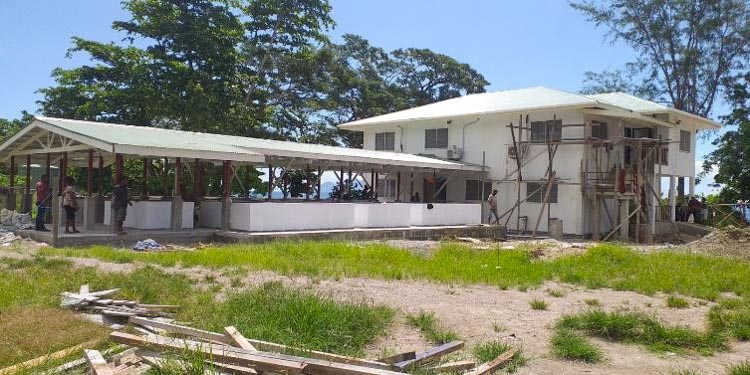
“We think the office building and ponds look fantastic! We expect completion of Phase 2 – fencing, utilities, and further pond construction – within the next few months.”

The first phase includes a laboratory, an office, a covered area of tanks for growing juvenile fish, and a perimeter fence. 

MSSIF has supported the MFMR for the past decade. 

The fisheries ministry hopes the project will provide much-needed facilities to import tilapia and to make an improved strain available to rural fish farmers. This is driven by MFMR’s policy to develop an aquaculture sector that supports rural livelihoods, food security and economic returns.

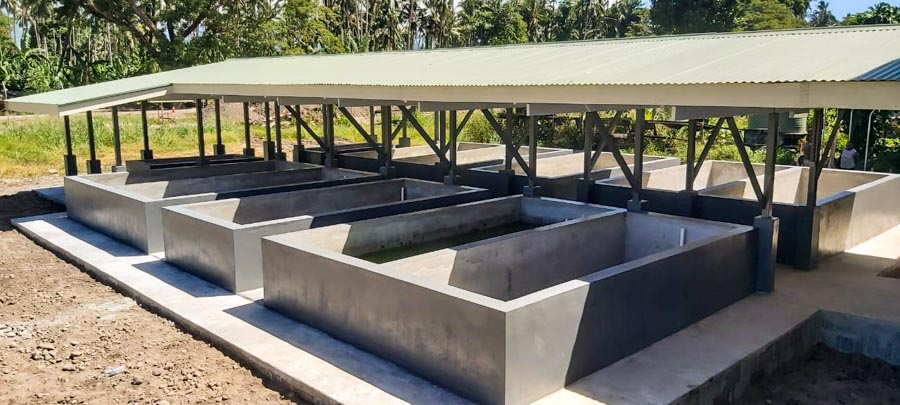
Newly built concrete pools, with roof, to be filled with water to hold tilapia, Aruligo hatchery, Guadalcanal
These pools at the Aruligo tilapia hatchery will be filled in the next phase of the project

Optimism over new venture

MFMR said the COVID-19 pandemic had done little to dampen the spirits of the group of dedicated government officers and contractors who continued to work on construction activities at the hatchery. Ministry staff conducted a site visit in April to see first-hand the stage the project had reached and were satisfied with progress.

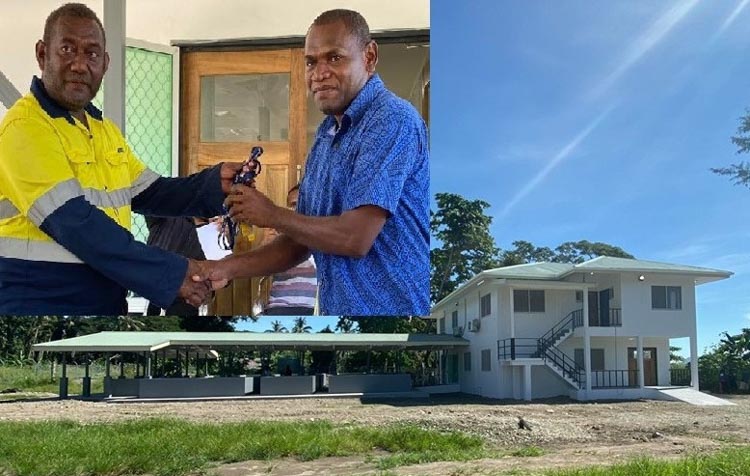
The Ministry of Fisheries is developing the Aruligo site into a national aquaculture centre. On 9 June, it was officially handed over to the ministry. 

During the handover ceremony, the ministry’s Under-Secretary of Corporate Service, Patterson Lusi, appealed to the Aruligo people to look after the property.

“As we gather in this magnificent building and the first set of ponds that we have here, it demonstrates a true commitment that we all have in making sure that there is a national tilapia hatchery project to be built here,” Mr Lusi said.

“I also want to appeal to people around here to look after the property. Remember the maximum benefits of this project will pour out to the communities in and around this area.

“The first species of tilapia will be from here, the first training for farmers will also be done here, so please look after our facility well.”

Speaking at the ceremony, the Senior Fisheries Officer of Guadalcanal Province, Willie Kokopu, said the division was proud to be part of the development of the centre.

Locals employed in building the site

Part of the centre sits on a World War 2 site, and early work involved clearing unexploded ordnance from the area. Locals were employed to help with this work, and the ministry said that more locals would be employed on Phase 2 works.

An elder was reported as saying that the project would “be a magnet for other proposed development in region”.

It is anticipated that construction will be completed this year. The hatchery should become fully operational once Nile tilapia are imported in 2021. They will be dispersed to farmers in late 2022 or early 2023.

Aquaculture is relatively new in Solomon Islands. MFMR’s Aquaculture division expects tilapia to contribute to food security and rural livelihoods. So far, the fish has only been used for stocking natural bodies of freshwater bodies to increase inland fishing production.